|
|


How to Clean Car Battery Corrosion
To get rid of battery terminal corrosion, mix baking soda and distilled water, dip a brush in the mixture and then brush away the blue-green foam carefully.
Even though corrosion is normal for healthy batteries, too much buildup could keep your car from starting. We recommend you check and clean corrosion every six months.
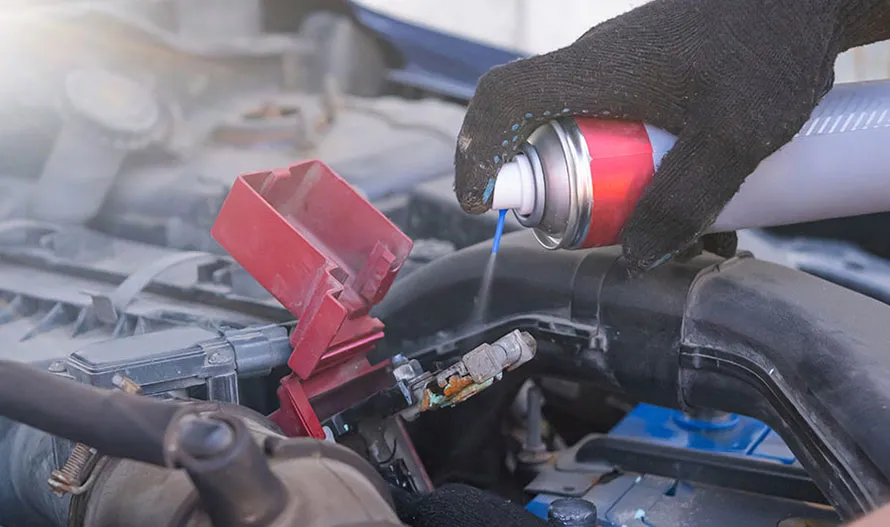
Keeping your battery terminals free of corrosion keeps the battery connection strong. You can also spray a corrosion preventative to keep your battery terminals clean much longer. While corrosion isn't directly caused by battery acid, you still do not want to touch it.
How to Clean Battery Corrosion
- Safety first. Wear safety glasses and gloves. Make sure you have good airflow around the battery compartment.
- Hook up backup power. Before cleaning the corroded battery terminals, connect a memory saver.
- Disconnect the car battery. Cover the positive terminal and pull the battery cable away from the battery to make sure the terminal and battery post don't touch while you're cleaning.
- Prepare the neutralizer. Mix the baking soda and water, either in a cup or on the brush. Don't do this on the battery case itself.
- Apply the mixture slowly at first. Use the brush first to sweep corrosion off the top of the battery. To neutralize the corrosion, work the baking soda into any big chunks of corrosion you find.
- Brush away from vent caps. Avoid getting your mixture into raised vent caps or holes at the top of the battery.
- Scrub the metal. Use the wire brush on the battery posts and metal terminals, even if you can't see corrosion on them.
- Neutralize anything left. Apply extra water and baking soda as needed to neutralize the corrosion around the battery casing. Wipe away with a paper towel.
- Dry the top thoroughly. Wipe down the terminals and top of the battery case. Again, make sure none of the baking soda-water mixture goes inside the battery case.
- Reconnect the battery. Connect the red positive terminal first, then attach the ground.
Battery terminal corrosion could be a sign of something more!
Car battery terminal corrosion might be a sign of a bigger issue. Get a battery test at your nearest Interstate All Battery Center.
Battery Corrosion Cleaning Supplies
With these supplies, you'll be well equipped to clean corrosion from a car battery.
- Baking soda and hot water. Warm water mixed with baking soda will neutralize the corrosion so you can safely brush it away.
- A wire brush. Use a safety brush when cleaning the lead battery posts and the car's clamps.
- A plastic brush. Nylon brushes for cleaning dishes would work well, but you could use a toothbrush, too. (Just throw it away afterward.)
- A towel or rag. You will need to dry the battery and terminals after clearing the corrosion.
- Gloves and eye protection. Plain sunglasses could work if you don't have any protective eyewear.
- A well-ventilated space. Do it outside, in the open garage or with a fan blowing away from you.
- A memory saver for cars. If you're cleaning a car battery and its clamps, you'll need to disconnect it. Disconnecting without a memory saver can cause expensive electrical problems. (A memory saver will prevent issues with your electronics, and it's available online for $9 to $20.)
Professional Anti-Corrosion Products
Corrosion preventative. Spray this after cleaning corroded terminals to prevent new corrosion from forming quickly.
Dielectric grease. Cake it on after you reconnect the battery to seal out anything that would interrupt the flow of electricity. Don't put it between the post and the clamp.
Battery post brush. Imagine a thimble the size of a battery post with dozens of metal bristles inside. This is handy and does the job in a pinch.
WD-40. You can use WD-40 on battery posts because it works its way into corners to neutralize corrosion, but it's not ideal as it can turn into tomorrow's grime if you leave it in there.
Go to our pros to clean battery corrosion.
Want to clean your car battery without all the fuss? Take it to the pros at an Interstate All Battery Center or one of the trusted repair shops that sells Interstate Batteries.
Never Use Coke to Clean a Car Battery
Cleaning a car battery with Coke might seem like an easy solution, but it's just as likely to bring in new problems. Pouring Coca-Cola on a car battery can leave a brown, gummy residue in the battery compartment that can interfere with high-performance car parts. Any amount of Coke that gets into the car battery can interrupt the sensitive chemistry inside.
What Causes Car Battery Corrosion?
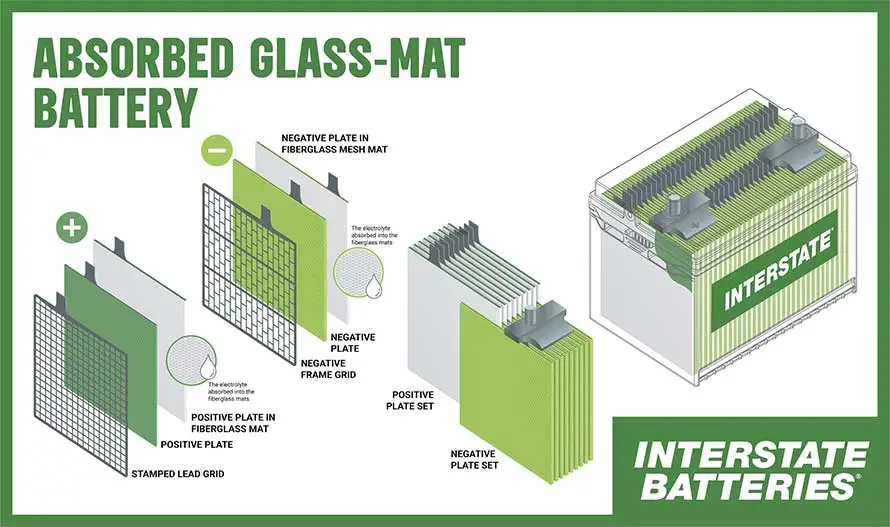
Battery acid can cause corrosion if the battery case is cracked. However, hydrogen gas is a more common cause of corrosion.
When you start the car or the alternator recharges the battery, the liquid inside the battery changes acidity:
- Charging a battery makes the liquid more acidic.
- Using a battery makes the liquid mostly water.
Electrolysis (electricity splitting water molecules into oxygen and hydrogen) also happens. Most of the time, the battery case keeps these gases inside until they reabsorb into the battery acid. If there's too much pressure built up in the case, a safety valve will release tiny amounts of hydrogen.
Hydrogen gas is odorless, colorless and nontoxic to people. It is corrosive to metal, easily reacting to lead, copper, steel, etc. If there's not much airflow around the car battery, that gas can linger and can gradually corrode most metals.
The color of corrosion comes from the kind of metal reacting to the hydrogen:
- Green or blue corrosion comes from hydrogen gas corroding copper, usually the wiring or clamps.
- White corrosion comes from corroded lead, zinc or aluminum.
- Brown or red corrosion comes from corroded iron or steel, which is notably less common but can happen.
The color of corrosion doesn't say much about the performance of the car battery or your car's charging system. Instead, the presence of corrosion itself is a sign that your battery drained and recharged a significant amount of power recently.
Corrosion at the negative terminal?
You might have a problem with the starter. Visit your nearest Interstate All Battery Center for a thorough test of your charging system.
Does Corrosion Indicate a Bad Battery?
Corrosion itself does not mean a car battery is bad. It is a sign that your car battery was recharging while hot and potentially in a poorly ventilated area, like a tight space under a car hood. If the battery needed to be recharged, it was drained, which can damage a car battery.
Often, you can clean corrosion off a battery and expect it to last five years or longer. Corrosion alone does not mean a battery has gone bad. It may be a sign that your alternator is overcharging the battery or there may be a small enough crack in the battery case near a terminal to let a few drops of battery acid corrode the posts. You may find some corrosion that was caused by charging in high temperatures a year ago, and the battery's just fine today.
The only way to know if your battery is weak is with an actual battery test.
RELATED: See these subtle signs of a dead battery.
Let the pros protect your battery from corrosion.
Visit your nearest Interstate All Battery Center or any location where Interstate is sold to test your battery.