
 |
|
CAR BATTERY CHARGERS

Car Battery Power Solutions
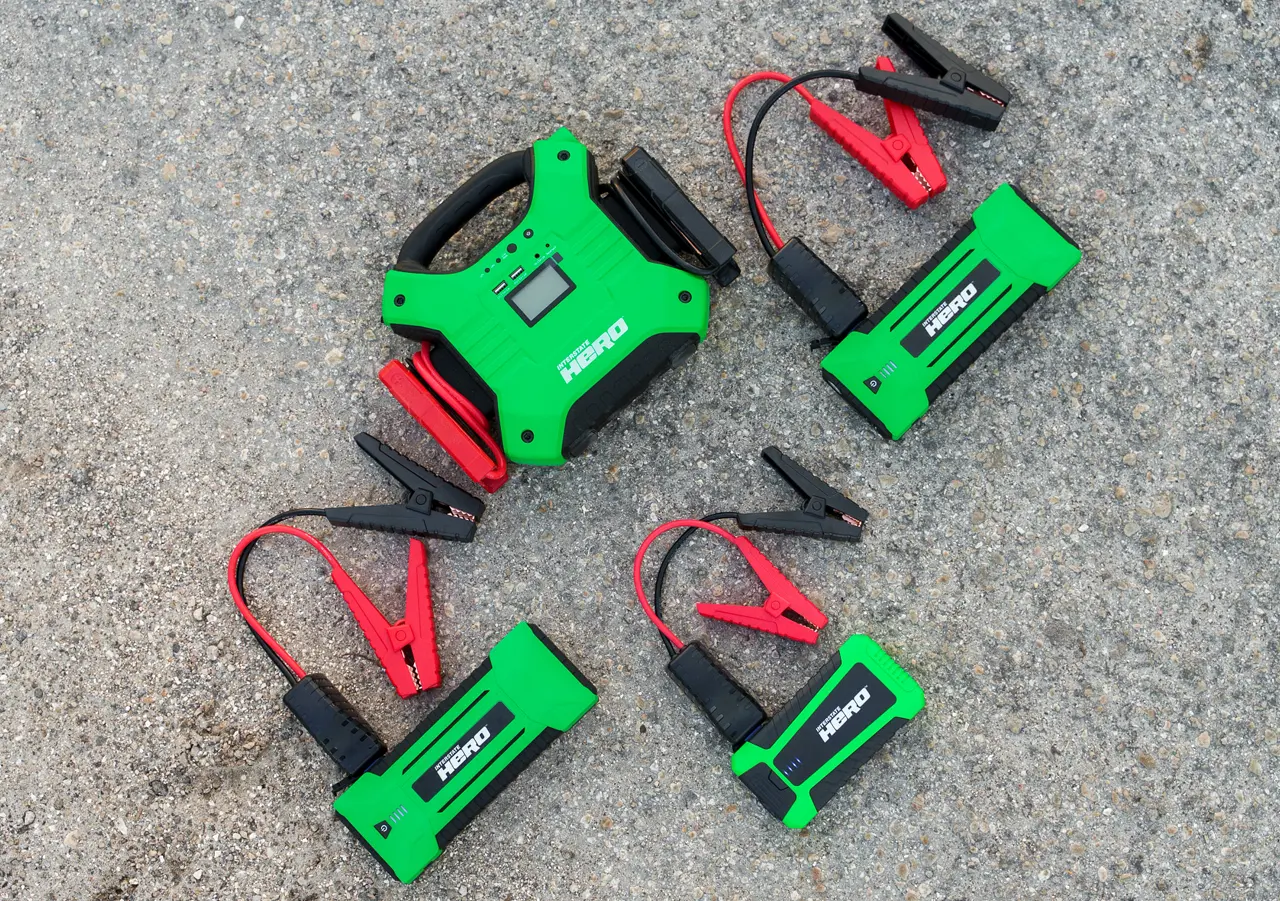
Interstate All Battery Center delivers battery starting assurance for every need. If your car battery dies, our portable jump-starters, boosters and jump packs) come to the rescue. If you store your vehicle, our selection of standard and trickle chargers will keep your battery in top condition.
Our battery chargers are suitable for boats, cars, golf carts, personal watercraft, trucks and more.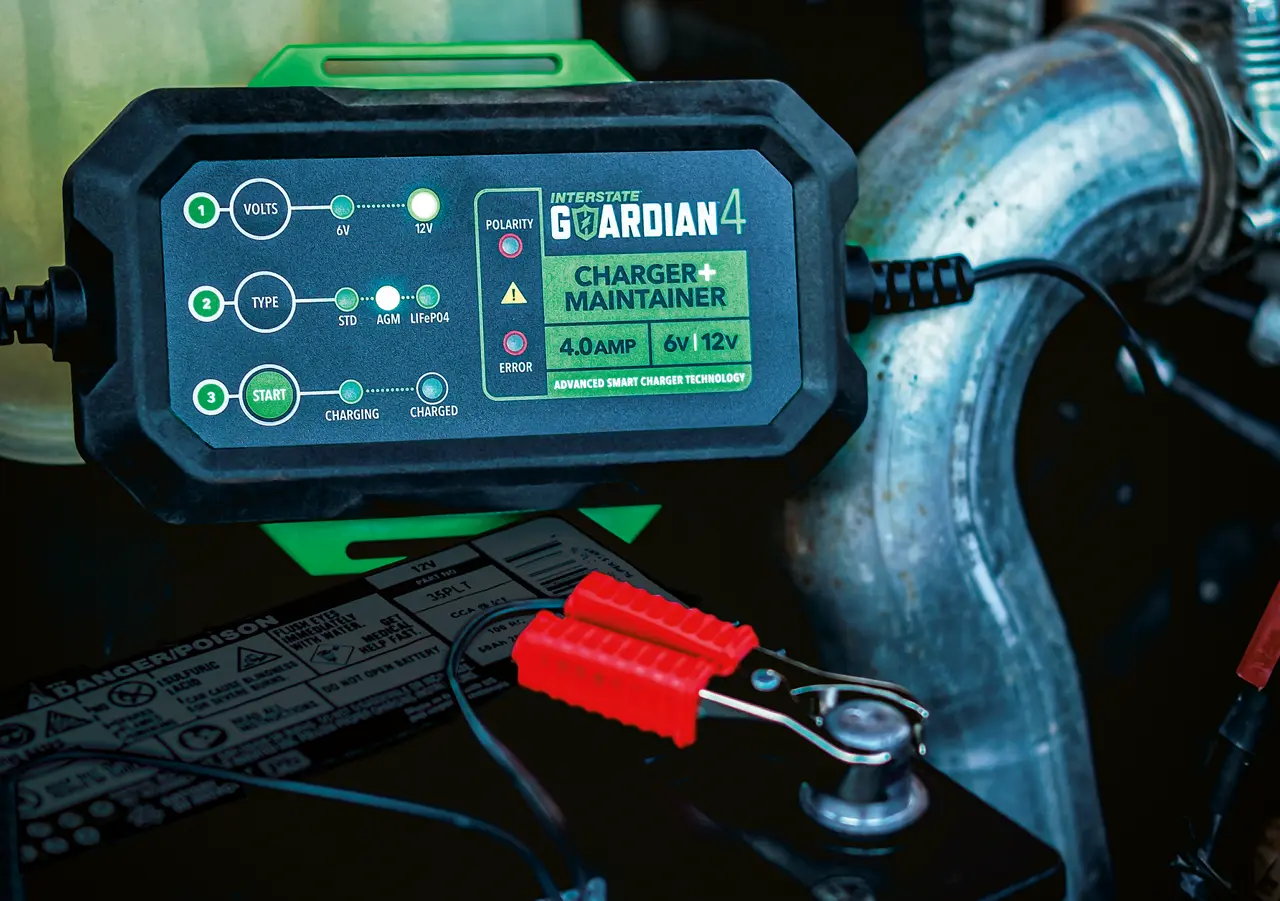
FAQs
Charging a car battery takes 4 to 48 hours, depending on how many amps the battery charger can give and how drained your battery is. (Note: Most battery chargers expect a drained battery to be at least 7 volts, or else the charger may consider it a bad battery and not deem it acceptable to charge.) High-amp chargers, such as the Guardian 4, work faster than low-amp chargers, though you may still need to wait for most of the afternoon to charge it. Make sure your charger is set to the correct chemistry. Typical lead-acid batteries require low-amp, slow charging because of how much power they can hold and how easy it is to overheat them.
- Lights left on
- Key fobs stored too close to parked vehicles (constantly pinging the system to be ready)
- Parasitic drain from aftermarket equipment such as alarms or dash cams
- Grime on the top of the battery forming microcircuits
Additionally, the engine might be off, but the car’s computer is on. Normal key-off drains can range from 20 to 50 milliamps because vehicles have onboard computers for the ignition, transmission, ABS modules and body control modules, and all those computers need to stay on to ensure your vehicle operates correctly every time you start it. (That’s why a car may have strange idling behavior or issues shifting gears if its battery gets removed without the memory saved.) In temperatures below 40 F, batteries can lose state of charge in less time from the same amp draw because cold temperatures make batteries work harder.
On top of this, all car batteries will self-drain over time, even if they’re not installed in a car. A healthy lead-acid battery will drain 5%-7% in a month at 80 F, even more if it’s installed because of the vehicle’s onboard computers. If a vehicle is sitting for more than two weeks, the battery will likely struggle to start the vehicle, especially in the cold.
This will depend on what charger is being used. A trickle charger can be used without removing the cables from the battery.
If you are using a standard battery charger (4-amps or higher) that does not have an AGM setting, it’s recommended to remove the negative and positive cables before charging. These chargers can exceed 16 volts, which can damage sensitive electronics on the vehicle. The battery can remain in the vehicle with the cables removed for charging.
Find an Interstate All Battery Center
- Closed
- Contact Store For Hours of Operation